( A combination of checking dead links on our review page and perusing through my personal emails yielded a free post! Granted this post is three months delayed but it’s still relevant and fun to read, I promise. 😉 )
Hello there fellow scotch lovers!
Sniff here giving his own report on the Macallan tasting and how it compares to other tastings that SnS has attended. I think it’s pretty impossible to write about these tastings without comparing them to each other because of obvious differences and similarities. Let’s start with the good, shall we?
Solid location. Carnegie Library is a gorgeous little spot but these well known brands seem to really pick gorgeous spots (Balvenie @ the Carnegie Institute for Science, Glenlivet @ the Longview Gallery). The layout had three main spaces, a waiting space downstairs for those who arrive early, a pre-tasting space, and the actual tasting room space.


The early-arrival space was just a pipe and draped room downstairs with no accouterments shy of some bathrooms. Once you got checked in via the QR code on your phone, you headed up to the “pre-tasting” space. After walking through an archway made to mimic the macallan estate building, there was an open area with lighted glass floor that was translucent with a mapped layout of the District. Pretty schnazzy but I’m sure that floor came with the library. lol. Going around the room there was a copper still (full size? probably not), a date chart for recording important dates from Macallan or via your phone for personal dates, a photo booth with Macallan backdrop, a colored light display that included a case containing five bottles of Macallan, a nosing station, a bar, and a giant bottle (able to be customized) between two bragging display cases containing some very rare bottles.


So there are the parts of the tasting you could observe from pictures but let’s take a look at was good, bad, and ugly, shall we?
The good. The choice of bottles was great: 10 Fine Oak (meh), 12 Sherry (great daily), 15 Fine Oak (nice), Rare Cask (pretty tasty). Not great because they’re the greatest bottles but because they’re a great selection to someone who doesn’t want to spend a bit over $500 to try something they might not even like. The greatest bottle is always the one you love enough to make your daily dram, quote me on it! The pre-tasting area was a little crowded but most of the displays were interactive so that made it a lot of fun. The actual tasting area was well laid out and had a fun presentation by Mr. Craig Bridger, Macallan brand ambassador. Overall the night, like the bottles, flowed pretty smoothly.
The bad. The pre-tasting area was a bit cramped for the number of people they hosted. Maneuvering some of the displays was difficult with the number of people but that’s generally preferable to an empty room, isn’t it? There was some serious misdirection when someone announced that everyone needed to head to the hallway to finally move to the tasting room. I feel like myself and the photographer who immediately started moving that way, were the only one’s who heard the announcement. The presentation initially started with the sales=pitch feel that Glenlivet owned so heartily but quickly evolved into a good time.
The ugly. There was no ugly. This was a free tasting event held directly by the Macallan!
Overall it was fun and well worth the cost of free. If you’re not signed up to receive invitations to Macallan’s events, I must encourage you to do so at Macallan’s website.
Slainte!
-Sniff
Glenmorangie has done it again.
I’m not sure they set out to create a dessert scotch with the Nectar D’or but scotch lovers responded very well to the very sweet, finished-in-dessert-wine-casks offering. That was 2011.

Here we are five years later and Glenmorangie has just released its seventh annual private edition bottling, called the Milsean (pronounced “Meel-Shawn”, it’s Scot’s Gaelic for “sweet things”). This offering was “extra-finished” in re-toasted red wine casks and bottled to look like something out of a candy shop (or sweetshop as the bottle reads). The alternating red and white stripes of the box and bottle are reminiscent of peppermints and for good reason.

On to the tasting.
Color: Rich Honey.
Nose: Immediately your nose bombarded with a birthday-cake-icing level of sweetness with fruity overtones like those you’d take in smelling the syrup from a can of assorted fruit. (I’m quickly reminded of peach and plum sugar candies I ate as a kid in Korea.) Re-toasting the former red wine casks to impart such a level of sweetness might have been genius on the part of Dr. Lumsden.
Palate: Immediately the spice of oak makes it’s way to the front of your tongue and you’re left with a barrage of mixed emotions. Like smelling simple syrup while popping a handful of cinnamon red hot candy into your mouth, so it’s quite a bit spicier than a typical red and white striped peppermint. With a bit of coaxing around the tongue, the spice subsides and gives way to very luscious fruits. These are absolutely decadent candied fruits. Or fruit candy like the kind you’d find in a grandmother’s candy dish that are just slightly stuck together and very obviously, pure sugar.
Finish: A handful of fruit flavors wash over the tongue with the texture of canned peach juice in this medium length finish.

After adding a spot of water…
Nose: The saccharine sweet intensifies and has become ridiculous. It smells like the overwhelming presence of sugar that one can smell when wafting the air over southern sweet tea. That dissolved-in-water sugar that you know is excellent for making rock candy. The natural fruit sugar smells are just a ghost behind this pure candy sugar.
Palate: The spice of cinnamon and oak have been tamed with just a small hint to remind you that you’re not drinking candy. Just a touch of bitterness finds its way to your tongue like a ginger chew. Interesting.
Finish: The finish is just as tasty with delicate notes of tree fruits subtly making their way to your attention.

Wow. This expression, I have no doubt, will disappear from shelves as the Nectar D’Or does. People will fall in love with the sweetness and may forget their drinking scotch at all. It’s truly uncharacteristic of any typical highland scotches but that might not be a bad thing. Variety is indeed the spice of life. Or in this case, the sugar and spice of life.
Slainte.
-Sniff

[Scotch] and myself aren’t much into buying bottles to sell them in the future. It’s not that we aren’t into the idea of collecting artifacts but life is too short not to enjoy some of the finest things you come across. With that said, we were fortunate enough to grab a bottle of the infamous Pappy Van Winkle 23 from a local store. So today, much to the chagrin of my wallet, we bring you a real review about a bottle that most of us have dreamed of but none of us have wanted to pay the market price for. I’ve placed our personal reviews back to back below and do hope you enjoy them 🙂
Oh, and if you learn ANYTHING from our reviews… do NOT add water or ice to PVW23. That seems to be the death knell for this tasty tipple.
***** [Sniff]’s review *****


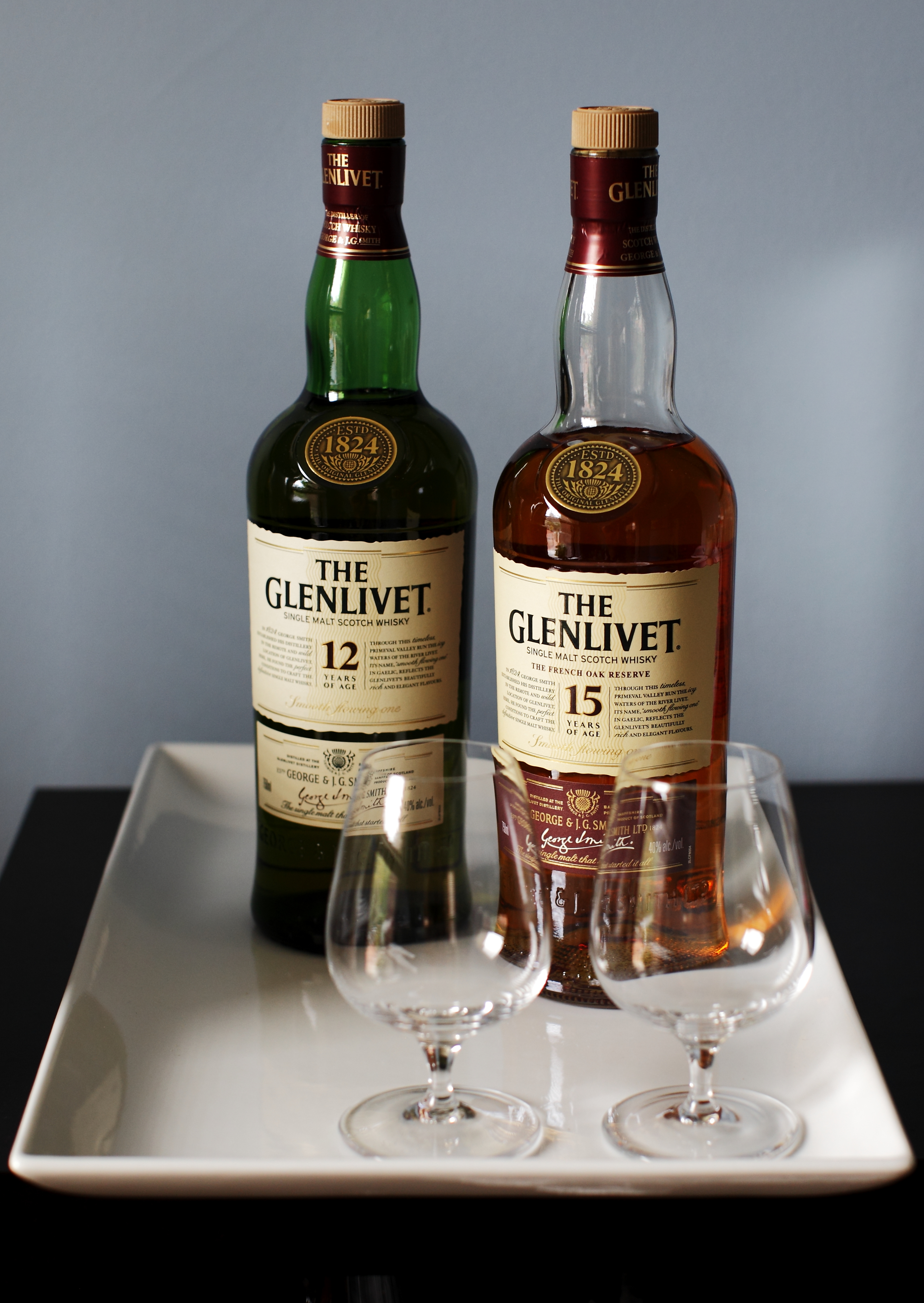
The Glenlivet 12 year versus the Glenlivet 15 year, which one is better?…… Trick question, those who answered one or the other need to stick around to read why.
It’s commonly assumed that the older the whisky is, the more that it should cost and therefore means the better it is. This couldn’t be further from the truth. If there is anything that you should learn today, please let it be that, “Age ain’t nothin’ but a number”. Yes, the older a whisky is, the more expensive it should be, because after factoring in time and the angel’s share (evaporation of whisky from the barrel), less whisky is actually in the barrel, therefore the need to sell it at a higher price to make the same amount of profit from less liquid. But that doesn’t mean anything about it tasting better.
The Glenlivet 12 (G12) and 15 (G15) are completely different whisky’s with very different flavor profiles and aromas. Don’t think of them as competing against each other but rather, another flavor within the family of Glenlivet to try.
Color: The Glenlivet 12 is close to a lightly toasted wheat and pale yellow. The Glenlivet 15 is more of a medium Oak color and lightly orange in the glass.
Nose: The G12’s nose is full of fruit flavors! You’re immediately blasted with a rainbow of aromas, pineapple, white grape, kiwi and gobs of tropical white fruit smells. The juice, most certainly, is loose. Then a light amount of white pepper, the fresh smell of a new wallet and light oak. Going in for another nose, an under-ripe granny smith apple and floral qualities appear.
The G15 is a completely different beast, but just as alive and layered. Opening the bottle I immediately smell fresh oak, round vanilla and sweet Sherry. There is a artificial peach aroma, like that of gummy peach rings, followed by molasses rich brown sugar and buttery toffee. Rich.
Palate: The G12’s mouth feel is light and not oily, like a racy sauvignon blanc. A light spice fills the mouth with a cereal breadiness. Vanilla, floral like a chamomile tea with dried orange peel in the background.
The G15 features toasted pecans and lime on the palate with a light oak bringing roundness. A honeyed licorice candy lengthens into a drying cocoa. Blonde coffee with vanilla and toffee flavor without the sweetness keeps me curious for another sip.
Finish: The G12 finishes a little sour and a tad tart, with a trailing light spice. The G15 finishes with spiced vanilla and toasted nuts and a hint of mint or menthol.
After reading this review you can see that these two scotches are completely different and can’t really be compared. If you’re looking for a tropical fruit sensation with a clean citrus nose and light spice and freshness, go for the Glenlivet 12. If you want more fall type spices, with rich vanilla and toasted nut flavors, then you would definitely go for the Glenlivet 15. Remember that a brand’s lineup isn’t always about getting better with age, but rather changing with age.
Scotch, Out.
A great thing to remember when diving into your whisky journey is that everyone’s palate is different and unique. I might like something and give it magnificent praise, while you might think that it’s the worst whisky you’ve ever had in a cup. We here at scotchNsniff give you notes and reviews in hopes of shedding light about the whisky you buy, rather than the marketing campaigns built to sell the stuff to you. With that having been said, this next bottle for review is brilliant!!
A lot of people assume that the older a whisky is, the better it is and of course that means that it can and must command a higher price tag. [Sniff] and I definitely don’t mind paying for the good stuff but we love finding a deal even more. I [Scotch] have found that I really enjoy the 17 year mark. Hibiki 17 year, delicious. The Macallan 17 year fine oak, superb. And now this, the Balvenie 17 yr DoubleWood.
Color: Having spent the majority of the time maturing in traditional oak casks then the last couple months to a year in European Sherry casks, the color is A golden matte bronze with just the edge showing copper.
Nose: I’m initially greeted with the classic Balvenie oak, soft vanilla and honeyed richness. That leads into bing cherries macerated in a liquer, almost like a kirschwasser. There are layers of green apple and turbinado sugar (less molasses-ey). A slight waft of toasted cereal and malted barley are in there after swirling. The nose is inviting and all of the aromas are well married and yet still distinct but showing no edges.
Palate: The first sip of the whisky swirling around my mouth reveals a mexican cinnamon spice, not as harsh as McCormicks cassia cinnamon, along with green almond. Dried apple skins, red and green, coated in rich vanilla toffee. Throughout the entire taste, a very mellow but very pronounced Sherry surfboard carries all of these flavors down a great wave of fruit and spices. Awesome.
Finish: The finish, although awfully short, just keeps you wanting more. There is a light spice and vanilla sherry sweetness that remains but it is short.
This is a fantastic whisky that really shows how deliciously, both the Sherry and the Oak casks, can work together to form a great whisky. The price range seems to fluctuate between $99 to around $130, and for any price within that range, would be a great deal. For a price comparison to an equally great whisky, the Macallan 17 year Fine Oak is $190, but definitely not $70 better.
Scotch, Out.

Welcome back all you whisky fans to another exciting installment of #scotchvsscotch
In today’s battle royale, we pit a solid, smokey, 14 yr Oban (pronounced Oh-Bun) with its relatively new little brother, Oban (remember Oh-Bun) Little Bay. Which one will end up on top, which will we be running to the stores to grab another bottle of, or will we want to drink them at all after this review?
Color: Both of the contenders in this arena are very similar in color. A light toasted wheat or straw, with the Little Bay having a slightly deeper toasty color, probably from the time spent in smaller casks (a large or rather smaller, depending upon how you look at it, differentiating factor between the two).
Nose: Starting off with the Oban 14yr, I’m instantly transported to a sea coast with a little salinity in the air. A low fog of wood smoke rolls over the water, dissipating as it reaches land. I hear seagulls off in the distance. Orange blossom flowers, a rich honeyed stone fruit and white pepper are in the background behind the even layer of smoke. Sweet gentle smoke. Next up is the Little Bay. This nose is completely different from the standard 14yr. Incredibly sweet nose, like stuffing an un-toasted marshmallow in your nose and then inhaling through it. A golden syrup and sultana raisin is nestled in the nose along with mint and a fresh tobacco leaf, not dried and smoked, but a vegetal herbal hint. Going back and forth between the two I find that I enjoy nosing the 14yr a lot more after nosing the Little Bay. A certain kerosene/Sauternes component comes out in the Little Bay that I do enjoy, but find a little harsh.
Palate: First up is the Little Bay. Thank goodness the incredible sweetness was only in the nose and not on the palate. Herbal, minty and lemon peel, like you’d have with your morning espresso. A light whiff of smoke just in the tail end while breathing out. The flavor and mouth feel is rich and full and a little bit of wood sourness comes out with it swirling in my mouth. No need for water but a little does increase the floral qualities and lemon. Interesting. Now for the Oban 14! A sweet smokey arrival as it dances around my tongue. Bran biscuits with smoke, honey with smoke and a great creaminess….with smoke. The rolling fog of smoke I spoke about in the nose is ever present but always arriving with another sweet component. Don’t add water to either, just enjoy them neat. The smoke seems to be a delivery service bringing sweets door to door, like a 75 year old smoking-veteran-girl-scout delivering Somoas, Do-si-do’s and Rah-Rah raisins.
Finish: The finish on both of them seem to be relatively mid-length. The smoke on the 14 yr stays around for a while even when you brush your teeth before bed, but the spices and sweets leave relatively soon. Where as the Little Bay’s sweetness lingers with the whiffs of smoke near the tail end of the finish. I enjoy the whiffs with sweetness over London Fog.
You may be asking yourself, well who wins in the end [Scotch]? And my answer to you would be…. They’re both winners, because they individually cover different spectrums of the scotch rainbow. The 14yr is mellow and full bodied, and the smoke is gentle and welcoming. The Little Bay is sweet and bright with very very light smoke, just near the tail end of the finish. In my opinion the Little Bay is a perfect introduction into the smoke, that the Oban 14yr has to offer. Sometimes it’s not a competition and you should just enjoy both! Slainte!
Scotch Out!
Michel was a Belgian man, who purchased barrels of whisky from several different distilleries in Scotland. He then traveled to Spain to find the very best Sherry butts from Andalusia. Then finally, he assembled the two and housed the Scottish whisky filled Sherry casks in his caves dug out from a mountainside in Burgundy, France. Sadly Michel Couvreur passed away in 2013 but his well-known whisky’s will live on. His apprentice Jean-Arnaud, who had trained under him for a decade, carries on his legacy of blending spirits and the flavor continues.
We have for sample Michel Couvreur’s Overaged Malt Whisky, which is a single malt blend composed of whisky aged 12-27 years. The second offering is a Grain whisky, named Clearach, from malted barley matured in sherry completely. On to the tasting!
Color: Clearach is of a lighter color than the Overaged, but both exhibit a dark walnut color, with the Overaged leaning towards a dark oak color.
Nose: Clearach immediately explodes with a nose full of cereal, grains and nougat. Very light low-grade honey, as if it was pulled right out of the comb, raw. There’s a hint of white grape juice and a sour grassiness that comes out as well. A multilayered nose. The Overaged whisky is far more along the lines of what I love to drink when it comes to Scotch. Full of rich milk chocolate notes, caramel and toffee. Burnt sugars and sweet vanilla. I pick up the freshness of stone fruits like apricots and plums with a slight sourness that isn’t a bad thing.
Palate: Beginning with the Clearach the palate is full blown grain, barley and cereal rich. Biscuits come to mind with bran and saw dust. A lot of oak but not overpowering oak. And although there is a sawdust-like component, it’s not an astringent wood, just a little wood sour. Nutmeg is a predominant spice in the Clearach with a vanilla undertone. The Overage is nice and sweet. Coating, thick and rich as it rolls into your mouth. There’s an initial tobacco entry, but not like someone smoking next to you in the train station, but more like walking through a field in South Carolina growing tobacco. A sweet almost herbal tobacco without the smoke…Oh wait, I spoke too soon. There is a whiff of smoke but very light and near the end as I breathe out after I swallow. The flavor is full and rich and creamy. Both are 43% abv and perfectly suited to be sipped neat. Both have a very sweet syrupy texture and feel sticky on the lips.
Finish: The Clearach finishes lightly spiced, slightly floral with minuscule amounts of woody sweetness. Reminiscent of an Irish whisky to me. Good, but not Scotch. The Overaged on the other hand is a treasure. Although the finish is far too short, the ability to pour another glass more than makes up for it.
I purchased both of these bottles on sale for a low low price. The Overaged was $35 and the Clearach was $30. I spoke with the owner of the shop and he said that no one knew about “Michel Couvreur” so no one purchased them, hence the sale. I think the going rate for the Overaged is $75, well worth the price and could easily compete with, and beat, Glenfiddich 18, Glenlivet 15 and Dalmore 12. The Clearach on the other hand, I wouldn’t purchase again, not even for $30. Until next time.
Scotch Out.