Scotch VS Scotch : Glenfiddich 26 Excellence vs Glenfarclas 25
One of our primary goals here at ScotchNSniff is to bring you suggestions that are focused on value. We like the idea of bringing a suggestion to you that we can stand behind (and almost more importantly, one we can enjoy ourselves!).

Scotch VS Scotch : The Macallan 10 Fine Oak versus The Macallan 17 Fine Oak
We love getting requests for Scotch VS Scotch comparisons. We’ve had the idea to post these for a while but have only recently decided to be intentional about it. Our first installment of the SvS was the Aberlour A’bunadh versus the Macallan Rare Cask. Hopefully this comparison is just as entertaining. We’re sticking with two from the same distillery this time.
🙂
Nose:
Both very oaky… SURPRISE! The 10 contains some typical oak sour notes like a too-young-spirit. The 17 shows sweet notes off the bat and it’s rich in smoke too. The 17 is like fireplace smoke drizzled in sugar.
Palate:
The 10 is edgy and very forward with its oak infused spices. I hate making references to fresh cracked black pepper so often but oak always brings this out in the reviews. The 10 suffers from an almost bitter edge like cinnamon though. The fruit require a bit of work to taste… subtle behind the oak. The 17 is also full of spices and signature oak offerings are balanced with a sweetness.
Let’s add some water, shall we?
The 17 has turned into quite the fruit sugar drink that teeters the entire time on the line of the oak qualities. What a wonderfully balanced dram. There is light sweetness in the 10 now but it’s become insanely tannic. To the point it’s difficult to decipher flavors. It’s still a bottle of oak infused water. It’s no where near the balance of sweet like the 17. Comparitively, the 10 is unrefined against the 17. Like it wanted to be it’s big brother but barely got halfway there.
Finish:
The 10 finishes like a champ though. It rolls off smoothly and doesn’t linger like an awkward phone call. It’s cordial and willing to say goodbye. The 17 is smooth, warm, and thick like honey. It finishes like a lover not ready to leave. Sweet smoke lingers if thee is such a thing.
(the post water finish changed a bit drastically)
The 17 finish becomes like melted butter on the tongue but more refreshing than oily.
The tannic ride doesn’t end with the 10. Time to drink a half a gallon of water to deal with this mouthful of cotton balls.
And there we have it. Is the 17 worth the $100 difference? Without a doubt. A wonderfully balanced bottle is a treasure. I’m surprised the 10 is even produced to represent the Macallan Fine Oak line. You’d have to be in love with sour, young oak to really love it. I’d rather spend the same on the standard 12 and enjoy the sherry. SlaintĂ©!

Scotch VS Scotch : Aberlour A’bunadh versus The Macallan Rare Cask
We’re comparing a $90 cask strength Aberlour to a $300 macallan. Is there a $210 difference in these bottles? Let me just say off the bat, the packaging, bottle, and bottle topper for the rare cask are worth the first hundred dollars. The bottle is beautifully cut and angled with feminine shoulders donning a low necked top. The topper is one solid piece of metal with a checkered pattern holding the cork. The packaging is magnetically held closed and wonderfully compliments the bottle. So with that very expensive but effective marketing aside, the bottles don’t compare in the presentation category.
Nose:
Considering the Rare Cask from Macallan and the A’bunadh from Aberlour are both aged in magical Sherry casks, it’s no surprise that their noses are similar but the Abunadh immediately stands out… as its almost-20%-higher-alcohol-content train wrecks it’s way into your nostrils. The Rare Cask reeks of sherry and sweetened vanilla and more… The Abunadh is much more of a sherry with mouth watering orange marmalade and classic sun dried raisins. So though they both scream Sherry, they both have pretty obvious differences in the nose.
Palate:
The Abunadh at full strength is tannic and heavy handed. Holding it for a while on the tongue may be more dangerous than helpful to analyzing the flavors in the juice. The raisins reappear and pepper finds its way to the middle of the tongue. The alcohol is overwhelming though. Considering cask strengths like this (60%) can be cut in half, you’ve essentially bought two bottles of tastiness. That alone doubles the value of the Abunadh! So it’s really a $180 bottle vs a $300 bottle now! Minus the Rare Cask packaging, this has quickly become a fair fight!! The Rare Cask is much more kind to the palate… soft sherry gives rise to spices and pepper. They’re forward but not overwhelming.
And now we add water!
The Rare Cask was already mellow and the dilution only brings a touch of sweetness to the forefront but it’s still very much a spicy sherry bomb. Macallan knows their fans very well.
The A’bunadh isn’t any less tannic. It rushes to pull the water from your mouth but hold out for the sugar and spice of the Sherry. It might be the side by side reviews of two sherry bombs that’s hurting my objective… I’m betting on that… or the A’bunadh really did just shed its sugar.
Finish:
The Rare Cask is only slightly oily and lingers like sweet sugar cooking over a fire. A hint of caramelized sugar with a touch of smoke. Burnt sugar edges if you’ve ever had sugar fried into a pancake (like they do on the streets in Korea). The A’bunadh’s finish is manageable and not nearly as lingering. Surprising.
So how do they compare? The Macallan finds sugar and the A’bunadh finds spice. They both find sherry and they both taste amazing! They’re both worth their cost but the A’bunadh makes a great substitute for the Rare Cask as long as you’re not hunting for that extra sugary sweet over smoke over sherry.

Bruichladdich Scottish Barley : The Classic Laddie
This… has replaced my daily sipper! (Glenfiddich 19). It’s so well balanced it’s hard NOT to like. It’s an amalgam of flavors from all parts of Scotland that entertains the tongue without wearing it out. Fan-freakin-tastic dram!
Sniff’s 2014 Scotch Christmas Gift Idea List Extravaganza Part I (lol)
Let’s get started.
The parameters we’re using for this year’s Christmas gift list are:
1) A few $50ish bottle options
2) A $100 bottle option
3) A “dream” bottle option.
The dream bottle option won’t be something ridiculous like the Macallan M but something under a grand that is attainable with a good bit of saving. ($20 a week is a smidge over $1000 so it’s definitely a gift you’d be better off planning for)
50s
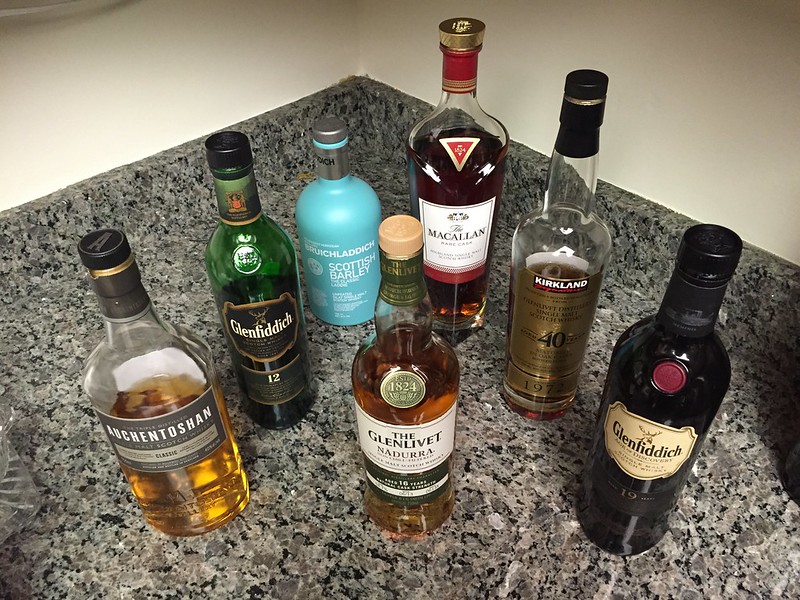
Glenfiddich 12 ($42)
Dalwhinnie 15 ($57)
Glenlivet Naddura ($90)
Can I do two dream bottle options??
Glenfiddich Age of Discovery 19
($170)
and the
Kirkland Alexander Murray and Co bottled The Glenlivet 40
($700 regularly, on sale in DC for $600 right now)
This is the smoothest and almost the most affordable 40 year scotch out there. Oak, cherries, creme, granulated sugar, a touch of pepper, cantaloupe, and just a touch of smoke. WOW oh WOW oh WOW.

What didn’t make my list and why…
Macallan Rare Cask ($300)
This would definitely make the dream bottle list but we haven’t done a formal review on it so it will have to wait until next year at the soonest.
Bruichladdich The Classic Laddie ($66)
This actually replaced my Glenfiddich 19 as my nightly sipper after I purchased it. It’s an amazingly balanced scotch. I’m not even a fan of peat but level of peat and smoke in this tasty morsel mixed with actual fruit flavors equals an AMAZING daily dram.
As always, enjoy responsibly with friends!
Slainte mhath!
–Sniff
Scotch ‘n’ Sniff at the The Balvenie Rare Craft Collection
Greetings and Salutations!!!
Sniff, here. Totally been slacking in reviews due to a myriad of factors but I’ll be writing today’s recap of the Balvenie Rare Craft Collection (RCC).
First thing’s first. A lot of people really get caught up in things like how to dress at events like this. Scotch went dressed in a button up with nice jeans and shoes. I went dressed in a zippered hooded sweat shirt, jeans, and slip on Vans shoes. Like this blog, we’re doing all of this for the common man, not the guy who shows up in a three piece suit. Alright, pretensions out of the way…
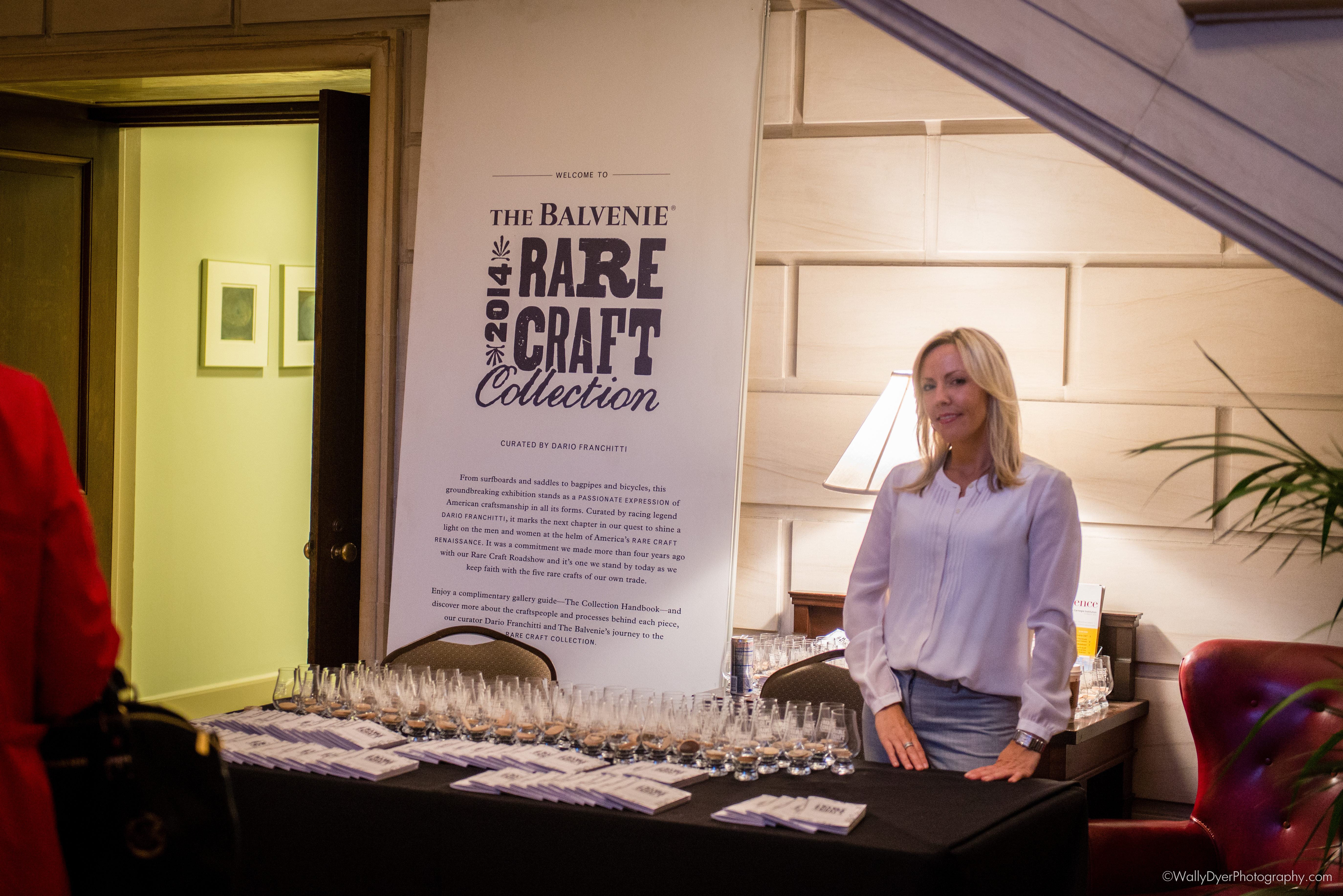
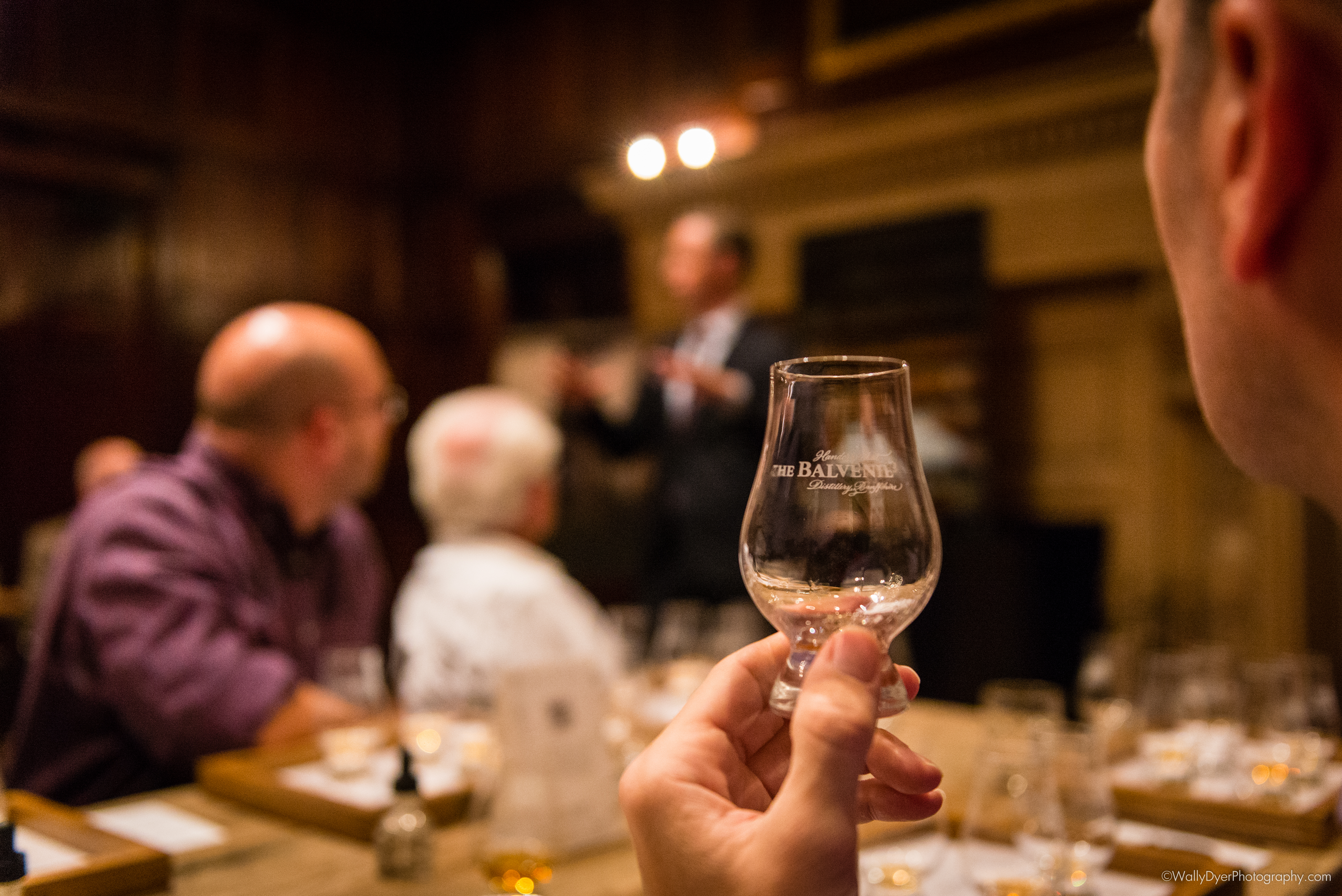
The DC event took place at the Carnegie Institution of Science in DC at 1530 P Street NW. When you arrived downstairs, you were greeted by a few ladies to verify your tickets (free to folks to RSVP to Balvenie’s “loyalty program” dubbed Warehouse 24). Once your tickets were verified, this smiling lady gave you a booklet explaining the Rare Craft event, three sample drink tokens, and a custom RCC Glencairn glass.

Upon walking up the steps, the first thing you notice is this door… which will look familiar if you’re a member of the Warehouse 24 program.

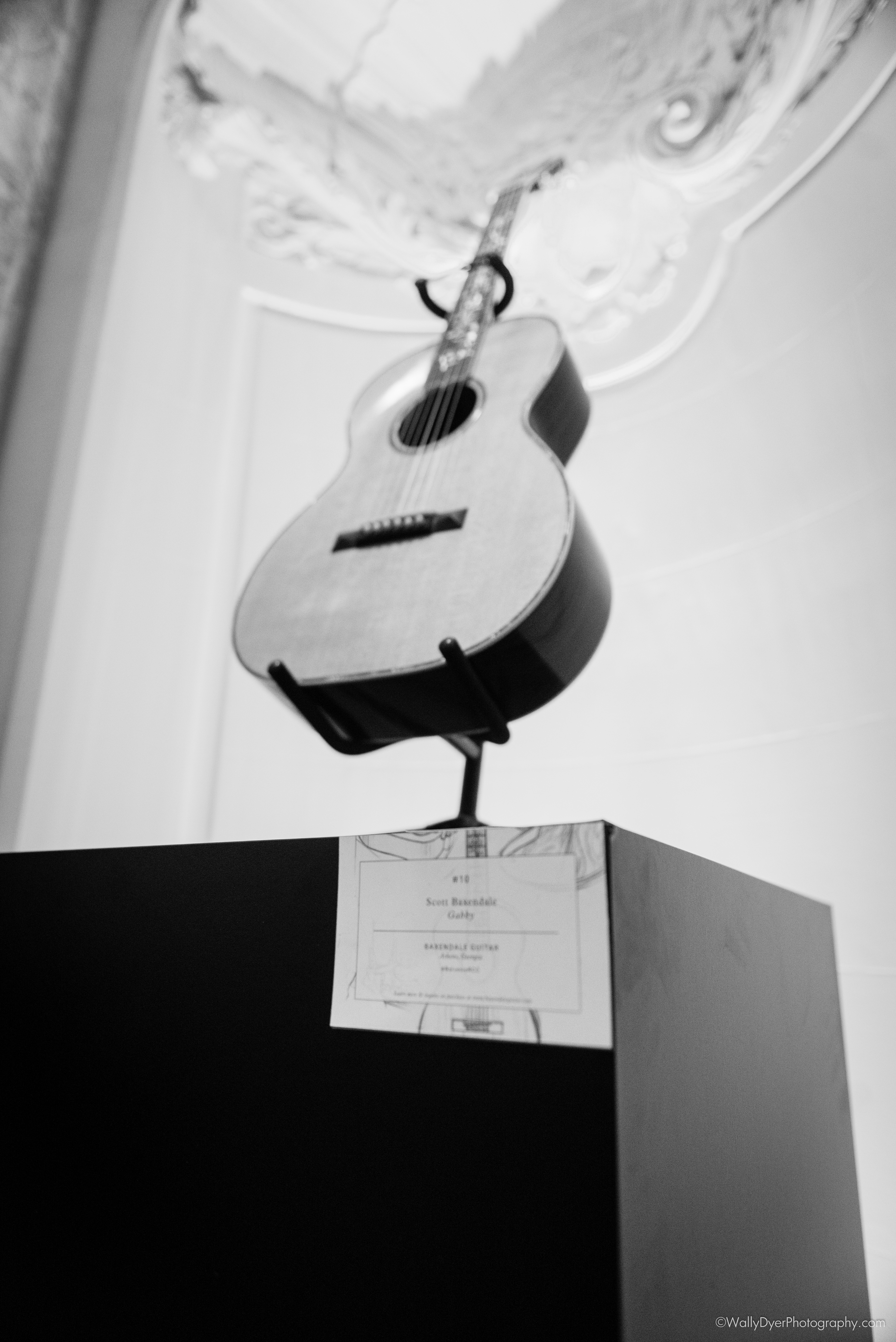
Balvenie’s goal for the night was to draw awareness to craftsmen who still practiced traditional methods of work be it to build guitars, saddles, engines, and even ping pong tables and associate that with their own method of crafting single malt scotch.


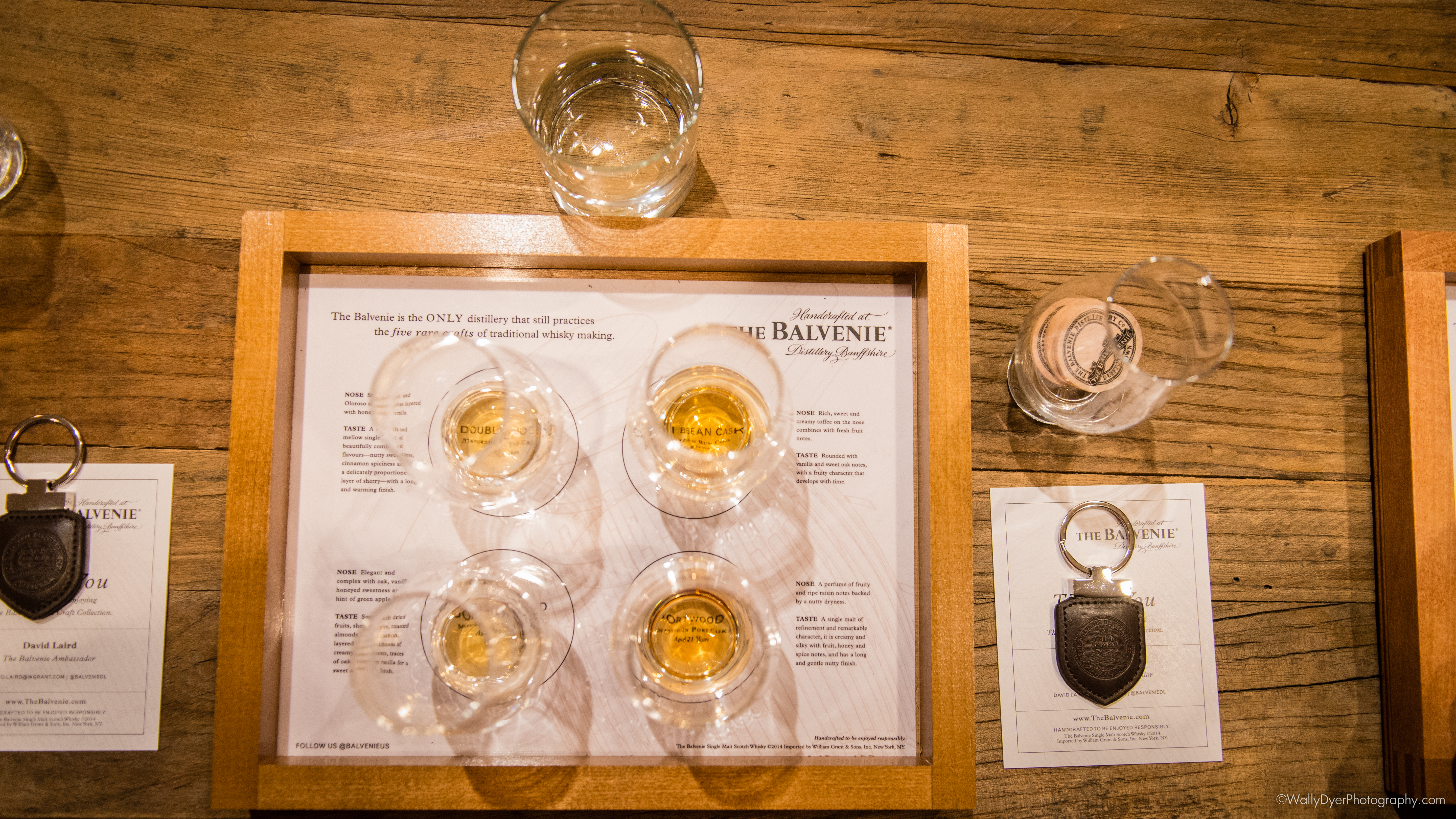
So that’s all good and well. Let’s get onto the SCOTCH. In the main area, there were two tables providing samples. The Doublewood 12 was being served at one and on the other end of the room, the Caribbean Cask 14 on the other.

Neither of these is what I was personally looking for (since we have both and have done reviews on both). I was looking for the Portwood 21. After asking a rep, I was informed that one had to sign up for the “Master class” to get access to it. The rep then pointed me in the direction of a young lady with an iPad who could sign both Scotch and Sniff up for the class. BINGO!


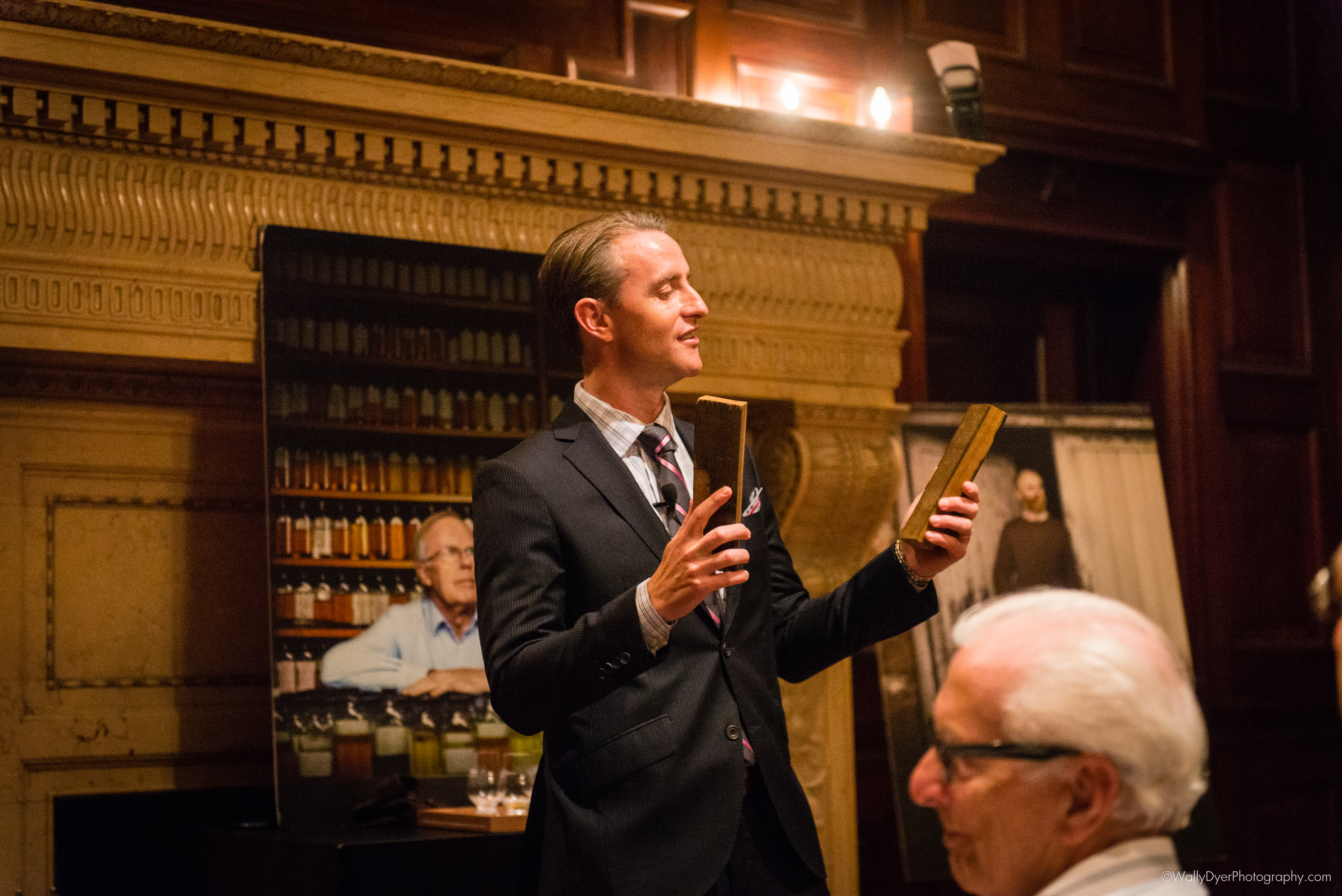
The class was taught by David Laird, a Balvenie US brand ambassador. Nice guy and very knowledgeable about scotch in general and the process used at the Balvenie distillery. From “Whiskey Dogs” to coopers to wood choice, he left no part of the process unturned. 95% of what we taught, we have available in blog posts here so it’s nice to know we weren’t far off of the general knowledge in the scotch world. 🙂
Overall the event was fun and educational. Scotchucational. 🙂
Thanks to Balvenie for hosting this good time! It looks like William Grant and Sons will be hosting another via Glenlivet in November, also in DC… will we see you there??
-Sniff
#BalvenieRCC
The Glenlivet Nadurra
(54.7% cask strength)
COLOR: light greenish gold
NOSE: charred oaken spices, pear, crisp fruit sugars
PALATE: Whooooaaaaaaa. Gonna need some water. The alcohol is burning through brutish spices that muscle their way to the top of a pile of apples and pears. A sweet creamy almost marshmallowy explosion of tamed fruit sugars hide just below the spicy surface. This is going to need some water. The finish is a peppery bombardment of the tongue ripe with oak and more pear/apple mix.
ADD WATER
NOSE: shifts to sugary spices, I was hoping it would get sweeter but it didn’t really
PALATE: buttery creamy on the tongue but the sweetness has been subdued, a bit of smoke rises behind the spices now
FINISH: a mashed pear drizzled in cinnamon and pepper shows up in the finish, it needs desperately to be baked.
This is a killer dram. Great job Glenlivet!
The Glenlivet 18
COLOR: orange gold
NOSE: sweet oak, cinnamon sugar, hints of common fruits, the cinnamon sugar owns the front of this nose
PALATE: initially very smooth, smells like it will be twice as spicy as it actually is, just a twinge of oakiness,
FINISH: light apples, more fruits, fantastic finish, something…. Spices, I can’t identify which ones but very pleasant like baking spices
ADD WATER
NOSE: more of the same but a smidge softer, more sugary
PALATE: what little bite the smidge of alcohol had is gone
FINISH: same flavored finished
Very pleasant 🙂
With our recent reviews on the Glenlivet 40 and our upcoming review of the Glenlivet 21 archive, we’re really trying our best to make comparisons of bottle that originate from the same distillery and how they might share some common tasting notes and themes among them. We’ll also be implementing our “Sweet to Peat” meter soon to help beginning tasters to really get an idea of what scotches are more appropriate for gifts and developing the palate. 🙂
-Sniff
The Glenlivet 21 Archive
~
NOSE: the spices have muted a bit